Shibuya Sky, Explained: What the Deck Is Actually Like
Three zones, two escalators, one rooftop with nothing above it. Here is the whole route from the 14th floor gate to the open deck at 229 metres, including the rules that catch people out.
 By Mia Nakamura, licensed Tokyo tour guide based in Shibuya
Short answer
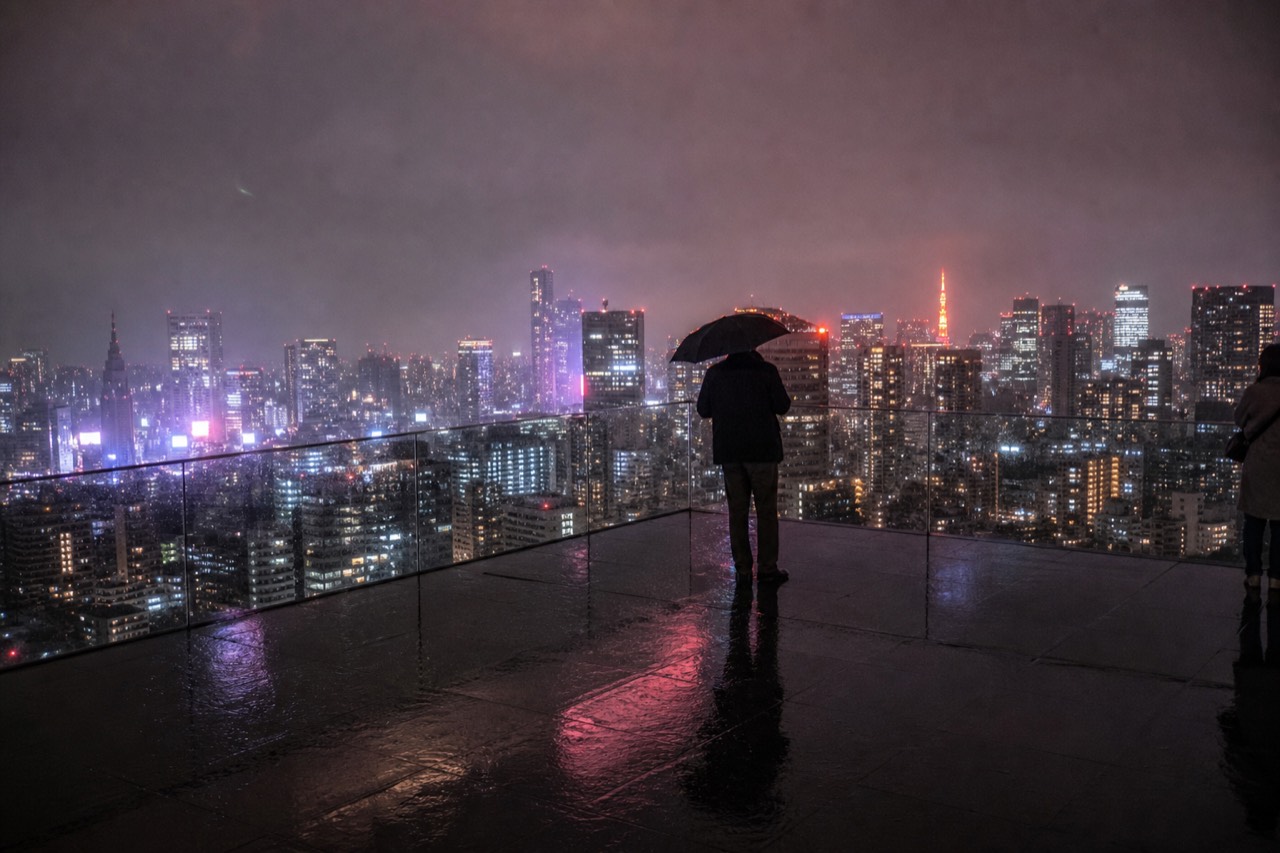
Entry is on the 14th floor of Shibuya Scramble Square. An escalator ascent takes you to the 46F indoor gallery, then a second escalator opens onto the Sky Stage, an open rooftop 229 metres up with no roof and no glass between you and the city. Most visitors stay one to two hours. No bags, hats or tripods go outside.
One Ticket, Three Zones
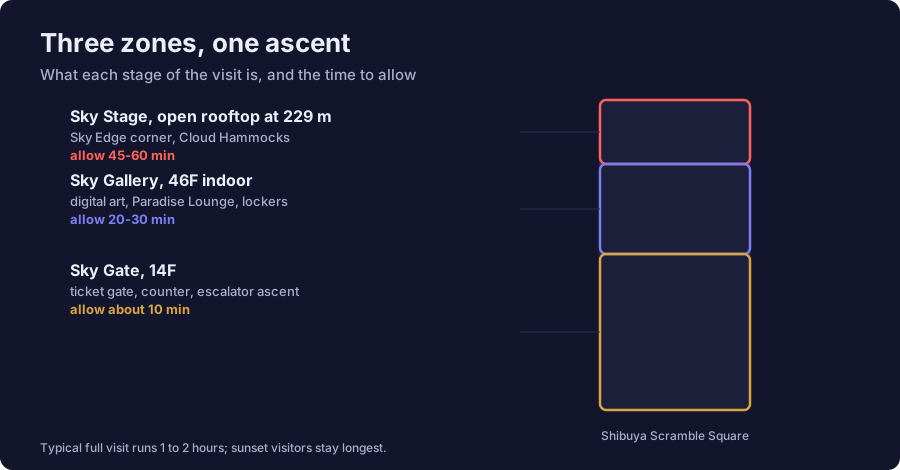
Entry starts on 14F, the gallery and lockers sit on 46F, and the open roof tops one timed admission. Check your slot before you build the district around it.
The thing nobody warns you about is the wind. You come up two escalators from a warm indoor gallery, step through a doorway, and Tokyo is suddenly there with nothing between you and it: no glass, no canopy, no handrail higher than your ribs. Two hundred and twenty-nine metres of air on all four sides. On a February evening it will take your breath out of you, and on an August afternoon the surface underfoot is warm enough to feel through your shoes.
That open roof is the whole reason this place exists as a separate thing from the dozen other high floors in Tokyo you can pay to stand on. Everything else about the visit is a sequence built to deliver you to it. This guide walks the sequence in order, names what is in each zone, and covers the two things that ruin visits for people who did not check first: the rooftop item rules, and the weather.
What are the three zones of Shibuya Sky?
The attraction splits into three named zones. Sky Gate is the entry and escalator ascent starting on the 14th floor. Sky Gallery is the enclosed 46th-floor level with digital art, windows on every side and a bar. Sky Stage is the open rooftop at 229 metres, the one with no roof, and it is the only part that closes in bad weather.
They are sold as one ticket and there is no way to buy just one of them, which matters because the indoor gallery is also the fallback when the roof shuts. That design is deliberate. Whatever the sky is doing, you get a 46th-floor view, and on a good day you get the roof as well.
Height is the number people quote, and it is worth putting in context: the building is 229 metres and 47 floors, opened on 1 November 2019, and it sits directly on top of Shibuya Station rather than a walk away from it. Compared with Tokyo's taller decks that is modest, and it is exactly why the view works. You are high enough to see the whole basin and low enough that the streets below still read as streets, with the Crossing recognisable directly beneath you.
The building's own description of the facility is on the official site, and the city tourism board's entry on Go Tokyo's listing for the deck covers the basics in plain English. If you have not yet decided which entry to buy, Shibuya Sky Tickets sets the plain admission against the guided options.
| Zone | Floor and height | What is there | Open to the sky? |
|---|---|---|---|
| Sky Gate | From 14F upward | Ticket gate, counter, escalator ascent with light and sound | No |
| Sky Gallery | 46F | Digital art, landmark displays, windows on all sides, Paradise Lounge bar, lockers | No |
| Sky Stage | Rooftop, 229 m | Sky Edge corner, Cloud Hammocks, open rails, Crossing Light show, seasonal bar | Yes, entirely |
Where do you enter, and what happens on the way up?
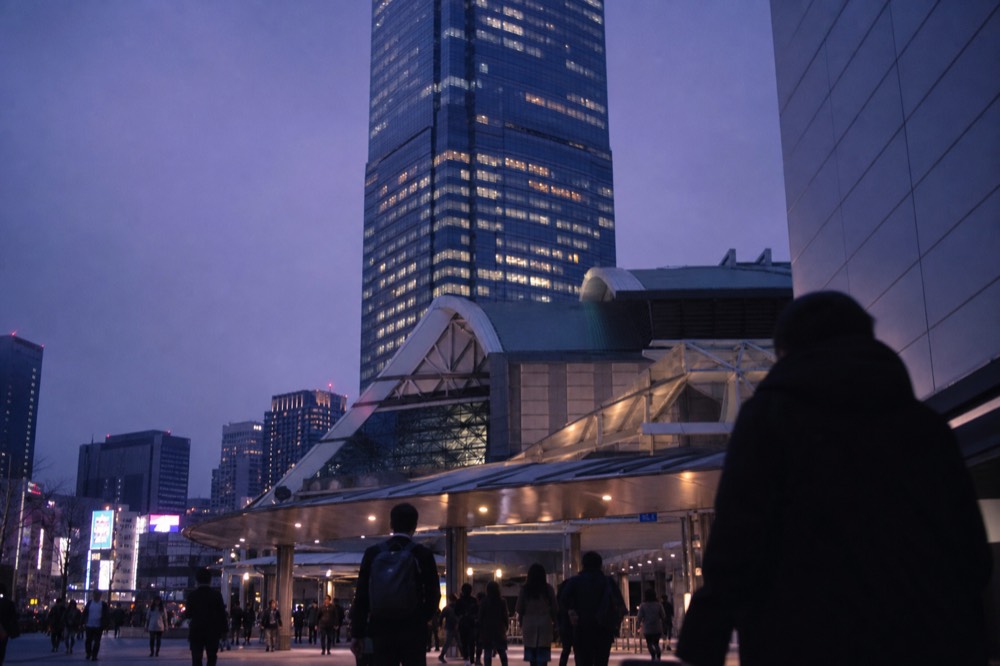
Everything starts on the 14th floor of Shibuya Scramble Square, where both the ticket gate and the on-site counter sit. You scan or collect there, then ride the escalator ascent that forms the Sky Gate zone, arriving on 46F. Allow about fifteen minutes from the gate to actually standing on the open roof, more at peak.
Finding the 14th floor is the first small hurdle, because the building is a department store below and the lifts serving the shopping floors are not the ones you want. Follow the signs for the deck rather than the shop floors and take the dedicated lifts up. From street level at the station, the building is the one directly above the tracks on the east side, so you are never more than a few minutes' walk from any exit.
The counter on 14F sells same-day admission at 3,000 yen for an adult before 15:00 and 3,700 from 15:00, which is 300 yen above the online price on both tiers. It is also the only place to buy the 1,200-yen elementary-age child ticket, which is not sold online at all. The catch that trips people is stock: the counter draws from the same allocation as the web shop, so if a date has sold out online there is nothing waiting downstairs. That mechanism, including the exact release timing, is set out in how the 14-day release works.
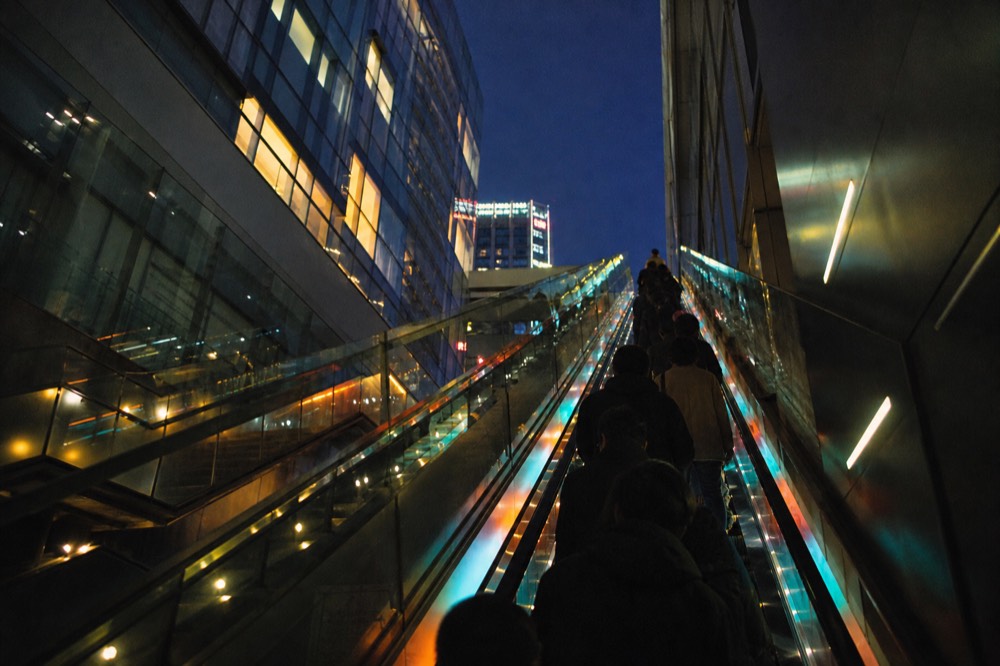
The ascent itself is designed rather than functional. It runs as a light and sound sequence on the way up, and the glass escalator section has become one of the most photographed parts of the whole visit, which is faintly absurd for a moving staircase and also completely fair once you are on it.
| Step | Where | What happens | Allow |
|---|---|---|---|
| 1 | Street or station | Follow deck signage, not the shop floors, to the dedicated lifts | 3 to 5 min |
| 2 | 14F | Ticket gate for online entries, counter for same-day and child tickets | 2 to 10 min |
| 3 | Sky Gate | Escalator ascent with light and sound, glass section near the top | 2 to 3 min |
| 4 | 46F | Lockers, then the gallery; every bag has to come off here | 5 min plus |
| 5 | 46F to roof | Second escalator out onto the open deck | 1 to 2 min |
| 6 | Sky Stage | The rooftop, 229 m, no roof overhead | As long as you like |
What is there to do on the 46th floor?
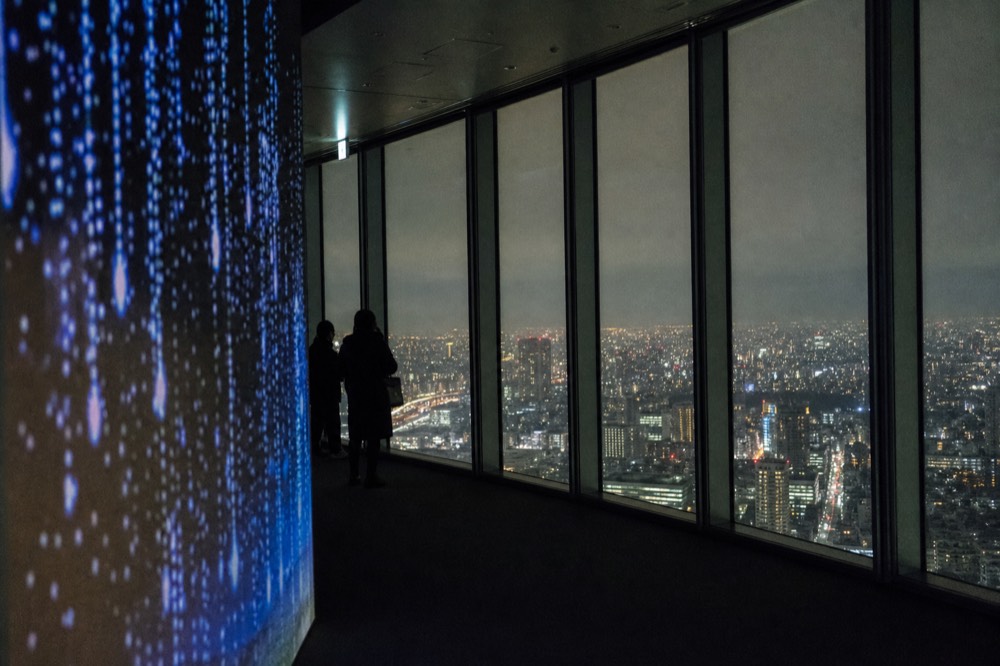
More than the average visitor expects. The Sky Gallery is a fully enclosed level with digital art installations, interactive displays that help you identify what you are looking at, floor-to-ceiling windows on every side, the Paradise Lounge bar, and the 100-yen coin-return lockers you have to use before going outside. It is also where you are held when the roof closes.
Treat it as two things at once. On a clear evening it is a five-minute pass-through on the way up and a warm place to thaw out on the way down. On a wet one it is the entire visit, which is why the gallery is stocked the way it is: the art gives you a reason to be there, and the windows still deliver a 46th-floor panorama in weather that has shut the deck above.
The Paradise Lounge is the part people miss. It is a bar on this level with skyline views, serving cocktails, non-alcoholic drinks and snacks, and it is not the same thing as the seasonal rooftop bar upstairs. If the roof is closed and you have already paid, a drink here converts a disappointing visit into a decent hour. It also solves the winter problem, where a January wind means nobody lasts more than twenty minutes outside.
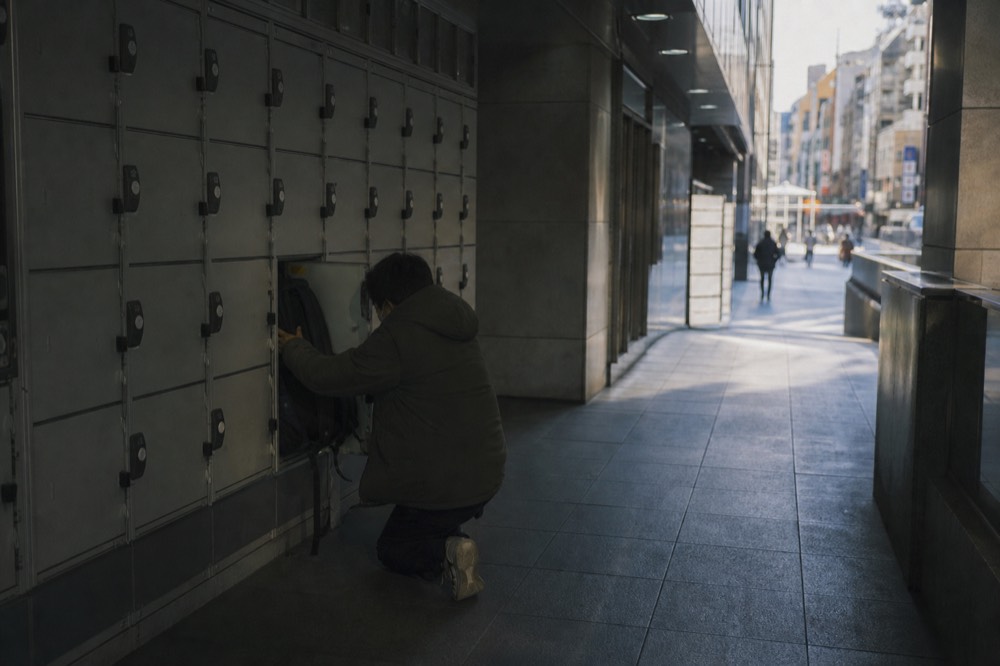
The lockers deserve a paragraph of their own because they are compulsory in practice. They take a 100-yen coin and return it when you collect, so it costs nothing beyond having the coin, and at peak times there is a queue for them. Anyone travelling with a suitcase should leave it in a station locker rather than dragging it up here.
| On 46F | What it is | Why it matters | Time to allow |
|---|---|---|---|
| Digital art installations | Projected and screen-based works through the level | The reason a closed-roof day is not wasted | 10 to 20 min |
| Landmark displays | Interactive screens naming what is out the window | Orients you before you go up to the open roof | 5 min |
| Windows on all sides | Full-height glass, 46th floor | Delivers the panorama when the rooftop shuts | 5 to 15 min |
| Paradise Lounge | Bar with cocktails, soft drinks and snacks | Somewhere to sit, and the winter warm-up | 20 to 45 min |
| Coin-return lockers | 100 yen in, 100 yen back | Compulsory in effect, no bags go outside | 3 to 10 min |
What is it like standing on the open roof at 229 metres?
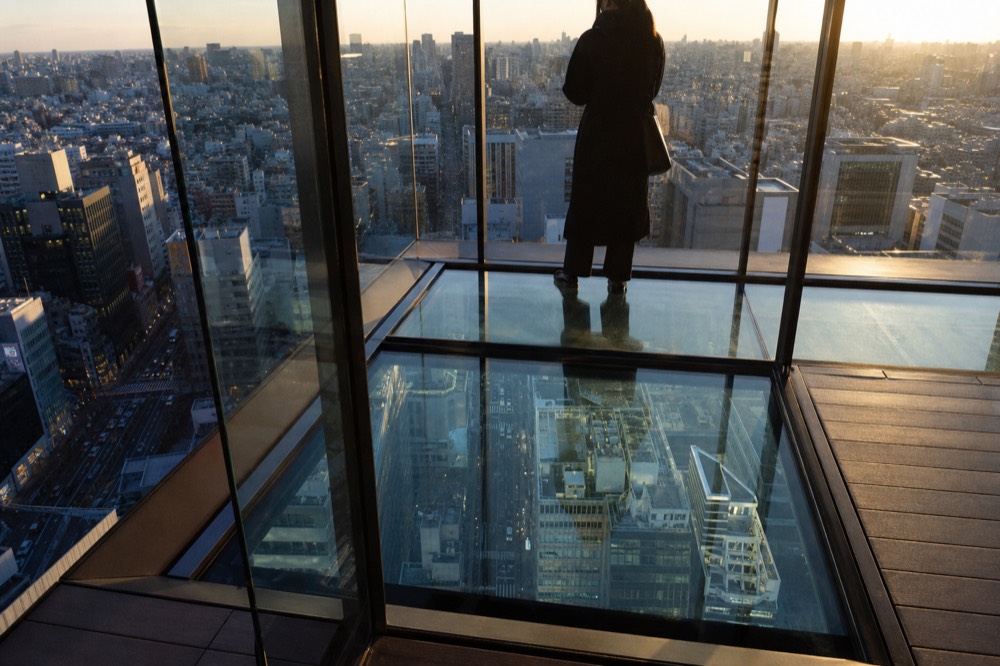
Open in a way that no glass-walled deck in Tokyo is. The Sky Stage is a rooftop, not a viewing room: low rails, sky overhead, wind, and the city laid out on all four sides. The features on it are the Sky Edge glass corner, the Cloud Hammocks, the broad open helipad area, and after dark the Crossing Light show projected across the surface.
Sky Edge is the corner everyone photographs. It is a glass-floored, glass-sided corner that puts the drop directly under you and the Crossing in the frame, and because there is exactly one of it, a queue forms. At peak moments visitors report waiting beyond fifteen minutes for their turn, which on a sunset visit is most of your good light. Do it early in your visit rather than at the moment the sky peaks.
The Cloud Hammocks are the opposite kind of attraction and, to my mind, the more memorable one. Suspended nets you lie back in with nothing above you but sky, they run on a first-come basis and they fill up fast. Ten minutes flat on your back at 229 metres watching cloud move over Tokyo is a strange and genuinely calming thing, and almost nobody puts it on their list before arriving.
Then there is simply the walking. The deck is large enough to circuit properly, and each side gives you a different city: Shinjuku's cluster to the northwest, the Tokyo Tower and bay side to the southeast, Yoyogi Park's dark canopy immediately west, and on a clear winter day the mountain behind it all. After dark the projected Crossing Light sequence runs across the rooftop surface, which is a reason to stay past the blue hour rather than leave with everyone else. Where each shot actually works, and what the camera rules allow, sit in what you can shoot and where.
| On the rooftop | What it is | The catch |
|---|---|---|
| Sky Edge | Glass corner with the drop underfoot and the Crossing in frame | One corner, one queue, past 15 minutes at peak |
| Cloud Hammocks | Suspended nets you lie back in, open sky above | First come, and they fill quickly |
| Open rails, all four sides | Uninterrupted 360-degree view with no glass | Wind, and no shelter of any kind |
| Crossing Light | Projected light sequence across the roof surface | After dark only |
| Seasonal rooftop bar | Drink sets served on the deck itself | Fixed season, age 20 and over, separate ticket |
| Helipad area | The broad western expanse, best Fuji sightline | Nothing shelters you there at all |
What can you not take onto the rooftop?
No bags of any kind, no hats or caps, no tripods, monopods or selfie sticks, no food or drink, and no earphones or headphones. Phones are fine, and so are neck-strap or pocket-sized cameras and binoculars. Everything else goes into the 100-yen coin-return lockers on 46F before you step outside.
The reasoning is falling objects, and once you have stood up there it stops sounding fussy. A cap lifted off a head at 229 metres lands somewhere on one of the busiest pedestrian districts on earth. Staff enforce this at the doorway rather than apologetically, so arriving with a backpack simply means going back to the lockers and losing your place in whatever queue you were in.
The camera rule is the one that catches enthusiasts. A body on a neck strap is allowed and a tripod is not, which rules out long exposures of the Crossing at night unless you can brace against a rail by hand. Plan for handheld work, and treat the rail itself as your only stabiliser. Pocket cameras and phones cover most of what people actually want anyway.
Luggage is a separate problem with a separate answer. The 46F lockers are sized for the things you are carrying around the deck, not for a suitcase, so anyone arriving straight from a station should use the coin lockers in Shibuya Station below before coming up. The current wording of every rule sits on the official ticket page, and it is the version to trust if anything here has moved since.
| Item | On the open rooftop | Where it goes instead |
|---|---|---|
| Backpacks, handbags, pouches, any bag | Not allowed | 46F coin-return lockers, 100 yen returned |
| Suitcases and large luggage | Not allowed in the building's lockers | Station lockers in Shibuya, before you come up |
| Hats and caps | Not allowed | Locker, or carried in a pocket |
| Tripods, monopods, selfie sticks | Not allowed | Locker, and plan on handheld shots |
| Food and drink | Not allowed | Consume on 46F or before entry |
| Earphones and headphones | Not allowed | Locker |
| Phone | Allowed | Pocket or hand |
| Neck-strap or pocket camera | Allowed | Around your neck |
| Neck-strap or pocket binoculars | Allowed | Around your neck |
What happens when the weather closes the roof?
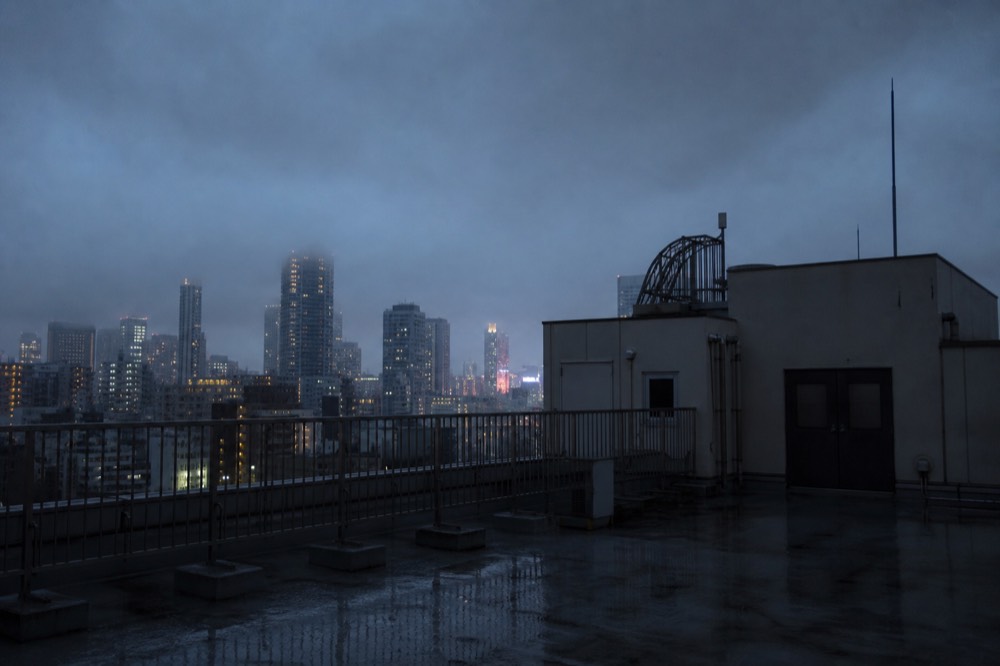
The Sky Stage closes without notice in strong wind, rain, lightning or extreme heat, and visitors are held to the indoor 46F Sky Gallery instead. The gallery stays open. Refunds are handled before entry only, so the decision point is at the gate, not after you have gone up.
It happens more often than the marketing photographs suggest, and the closure can arrive mid-visit as well as before you arrive. Wind is the most common trigger and the least predictable, because a breeze at street level in Shibuya can be a serious wind at 229 metres with nothing around it. Summer adds two more triggers: the heat clause, and the storm systems that run through Japan from August into September.
The practical response is to check conditions before you scan in. If the roof is already shut when you reach the 14F gate, that is the moment to ask about a refund or a different day, because once you are through, your ticket is spent. Official web-shop tickets are non-refundable with no date or time changes in normal circumstances, which makes the pre-entry weather check the only flexibility you have.
There is a fairer way to read this. You are not being sold a rooftop, you are being sold three zones, one of which happens to be a rooftop, and the 46F gallery on a rainy night is still a 46th-floor view of a city that looks extraordinary through wet glass. Whether that is worth the money on a bad-weather day is a real question, and the honest verdict on the price takes it seriously rather than waving it away.
| Condition | What closes | Where you go | Money |
|---|---|---|---|
| Strong wind | Rooftop Sky Stage | 46F Sky Gallery | Refund only if you have not entered |
| Rain | Rooftop Sky Stage | 46F Sky Gallery | Refund only if you have not entered |
| Lightning | Rooftop Sky Stage | 46F Sky Gallery | Refund only if you have not entered |
| Extreme heat | Rooftop Sky Stage | 46F Sky Gallery | Refund only if you have not entered |
| Closes mid-visit | You are moved indoors | 46F Sky Gallery | No refund, you have already entered |
| Clear conditions | Nothing | All three zones | Not applicable |
Is THE ROOF bar worth adding to the visit?
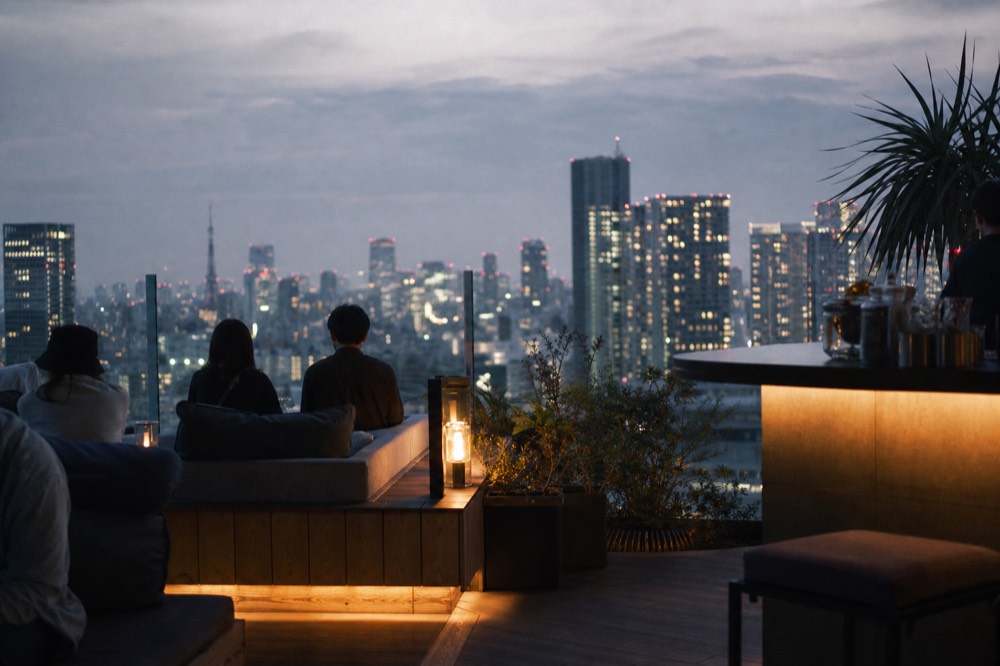
Only if you want to sit down up there. THE ROOF is a seasonal bar on the rooftop itself, running from 29 April to 25 December this year, sold as drink-set tickets from 7,000 yen with a champagne set at 8,000, and restricted to visitors aged 20 and over. Regular admission does not include it.
Price it honestly. A standard adult entry is 2,700 or 3,400 yen depending on your slot, so the bar set is roughly double to triple the cost of simply going up. What the extra buys is a seat on an open rooftop 229 metres above Tokyo with a drink in your hand, which is not a thing most cities sell at any price, plus sofa seating for groups of two or more where standing spots are the default.
Service runs roughly from late afternoon to late evening, with the exact start and last orders shifting through the season: later in high summer, earlier in the darker weeks toward the December close. Since the season ends on 25 December and does not reopen until the end of April, anyone visiting in January, February, March or most of April will not find it there at all, and the indoor Paradise Lounge on 46F is the alternative.
For a specific occasion it earns the money. For a first visit where the point is the view itself, the plain admission does everything you came for, and you can check the current price and what is left this week in a few seconds. The full ladder of what each tier costs sits in the breakdown of every price tier.
| Option | Price per person | Age | What it gets you |
|---|---|---|---|
| Standard drink set | From 7,000 yen | 20 and over | Rooftop bar access with drinks, in season |
| Champagne set | 8,000 yen | 20 and over | The same, with champagne service |
| Sofa seating | Within the set price | 20 and over | Seated, and it needs two or more people |
| Standing service | Within the set price | 20 and over | The default for solo visitors |
| Regular admission only | 2,700 or 3,400 yen | Any age | All three zones, no bar service |
| Paradise Lounge, 46F | Pay per item | Indoor bar | Open outside the rooftop bar season |
How long does the visit take, and how easy is the route to move through?
Budget one to two hours from the 14F gate to walking back out, which is what most visitors actually take. Sunset arrivals stay longest because they are waiting out the whole day-to-night transition. Nothing enforces a time limit once you are through the gate.
The rough shape of it: fifteen minutes to get from the gate onto the roof, thirty to fifty minutes outside if the weather is kind, ten to twenty on 46F on the way through or the way back, and however long the Sky Edge queue takes on your date. Cut that in half in a January wind, when honest visitors last twenty minutes outside and retreat to the gallery. Stretch it to three hours on a mild evening with a drink and a sunset. The realistic spread by slot type is broken down in how long people actually stay.
On movement: the route is built around escalators, both for the Sky Gate ascent and for the step out onto the rooftop, and lifts serve the building itself. If a step-free path matters to you, ask the staff on 14F or check the official site before you buy rather than after, because the answer depends on which part of the route you mean and I would rather send you to the source than guess on your behalf. Staff at the gate handle English without difficulty, and signage throughout is bilingual.
One planning note that has nothing to do with the deck. You are standing on top of a station that connects to most of Tokyo, in a district worth several hours on its own, so build the visit into a Shibuya afternoon rather than treating it as a stop. If you would rather someone else handled the timing and the entry together, guided walks with deck entry included cover the district and the roof in one booking, and the two-hour walk taking in the Crossing and Hachiko before going up runs $85 at 4.8 across 65 reviews with free cancellation up to 24 hours out. Take a look at what the guided version covers on your dates if the street level interests you as much as the roof. For a self-guided version, what else the district holds maps the walkable radius, and which hour to aim for settles the timing question.
Frequently asked questions
What floor is Shibuya Sky on?
Entry is on the 14th floor of Shibuya Scramble Square, where both the ticket gate and the counter sit. From there an escalator ascent takes you to the indoor gallery on the 46th floor, and a second escalator opens onto the rooftop deck at 229 metres, the top of the building's 47 floors.
Can you take a bag up to the Shibuya Sky rooftop?
No. Bags of any kind are banned on the open rooftop, along with hats, tripods, selfie sticks, food, drink and headphones, because anything dropped falls onto one of the busiest districts in Tokyo. Coin-return lockers on the 46th floor take 100 yen and give it back. Phones and neck-strap cameras are allowed outside.
What happens at Shibuya Sky if it rains?
The open rooftop closes without notice in rain, strong wind, lightning or extreme heat, and you are held to the enclosed 46th-floor gallery, which stays open and keeps its full-height windows. Refunds are only handled before you enter, so check conditions at the 14F gate rather than after scanning in.
Is there a bar at Shibuya Sky?
Two, and they are different. Paradise Lounge is the indoor bar on the 46th floor, serving cocktails, soft drinks and snacks year round. THE ROOF is the seasonal bar on the open rooftop, running 29 April to 25 December this year with drink sets from 7,000 yen and admission for ages 20 and over only.
What is the Crossing Light show?
A projected light sequence that runs across the rooftop surface after dark, using the deck itself as the canvas. It only happens once the sky is fully black, which is a practical reason for sunset visitors to stay on past the blue hour rather than leaving with the crowd that came only for the sunset.
How high is Shibuya Sky compared with the building?
The rooftop deck sits at 229 metres, which is the full height of Shibuya Scramble Square across its 47 floors. The tower opened on 1 November 2019 directly above Shibuya Station, and that position over the tracks is why the Crossing reads so clearly from the rooftop rails.
Your Shibuya Sky Booking Choice
Fit The Way In To Your Trip
Initial recommendation, not personalised. Confirm your party's requirements and dates with the provider.
Have a travel date in mind? Check the direct admission ticket before arranging the rest of your Tokyo trip.
The timed-entry ticket most visitors buy: straight to the 229 m open rooftop, all three zones, instant mobile confirmation.
Non-refundable once issued; sunset slots go within minutes of the 14-day release; no bags on the rooftop (46F lockers).
Compare Options And Fit Your Day
- the direct admission ticket
- The timed-entry ticket most visitors buy: straight to the 229 m open rooftop, all three zones, instant mobile confirmation. Non-refundable once issued; sunset slots go within minutes of the 14-day release; no bags on the rooftop (46F lockers).
- the guided crossing walk
- Two hours with a local through Hachiko, the Crossing and Center Gai, finishing with the included trip up the deck to read the district from above. Small-group walk; deck admission included; free cancellation up to 24 hours; meeting point on the listing.
- the night photo walk
- After-dark Shibuya with photo support: the crossing at full neon, local streets visitors miss, then the deck with someone who knows where skyline frames work. Deck admission and photo support included; free cancellation up to 24 hours; phone or camera photos, no tripods on the rooftop.