How to Buy Tickets for Shibuya Sky: The 14-Day Release, Explained (2026)
One date goes on sale at a fixed minute, fourteen days out, in a time zone most buyers are asleep in. Everything else about the purchase follows from that.
 By Mia Nakamura, licensed Tokyo tour guide based in Shibuya
Short answer
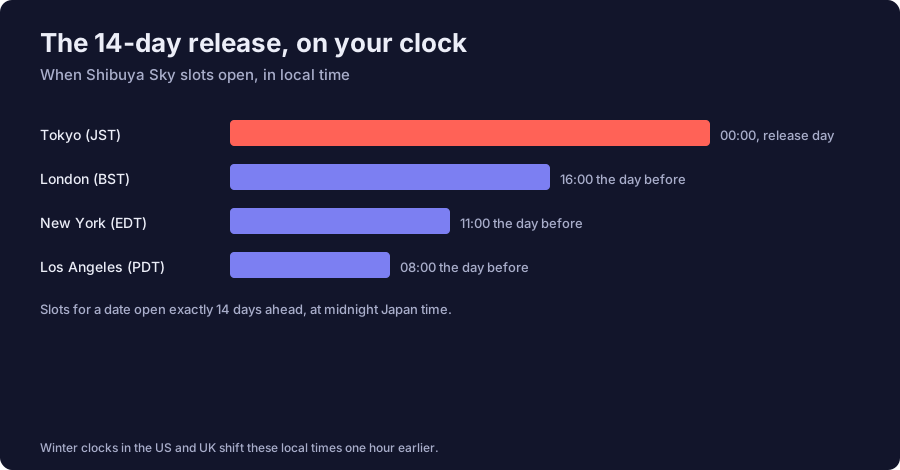
Admissions go on sale exactly 14 days ahead at 00:00 Japan time, which is 11:00 the previous morning in New York, 08:00 in Los Angeles and 16:00 the previous afternoon in London. Online costs 2,700 yen before 15:00 and 3,400 after; the 14F counter charges 3,000 and 3,700 and only sells what the web left behind.
Your Fastest Route In
Buy at the 14-day release in your own morning: the direct listing keeps the same timed entry in your currency, and tours that hold their own admission cover the dates the release cannot.
Midnight in Shibuya is not quiet. The last Yamanote trains are still swallowing people at the Hachiko gates, the crossing keeps cycling green every couple of minutes, and somewhere in that ordinary Tokyo night a fresh day of rooftop admissions quietly goes on sale. I have had guests tell me they missed a sunset slot by nine hours, which sounds absurd until you work out that the release is a clock event, in a time zone they were asleep in.
The purchase is simple once the timing is clear. Four routes exist, one opens at a fixed minute fourteen days out, one is a walk-up window that inherits whatever the internet did not take, and the distance between those two decides whether you are standing at Sky Edge with the sun going down behind Fuji or looking at a grey calendar. What follows is the mechanics: the release hour translated into your own time zone, the real price gap online, which tickets cannot be bought online at all, and the order to work through when the date you wanted is already gone.
How do I buy tickets for Shibuya Sky?
Four routes exist. The operator's official web shop, which opens each date exactly 14 days ahead at 00:00 Japan time; the direct admission listing sold through a booking page in your own currency; a guided tour that holds entry inside the package; and the same-day counter on floor 14, which is the dearest and the least reliable.
Start with the release, because it governs everything else. The official web shop sells timed entry in slots, and the full allocation for a given date appears at once, fourteen days before that date, at the stroke of midnight Tokyo time. Nothing trickles out earlier. There is no waiting room, no queue number, no pre-registration to complete, which is unusual for an attraction of this size and catches people who have booked teamLab or a Ghibli slot and expect the same machinery.
The direct admission listing is the same timed entry, packaged for travellers who would rather pay in their own currency and keep the booking with the rest of their trip. It starts from $17.70 and carries 4.7 stars across 45,800 reviews, which is the deepest review record attached to anything on this roof by a very long way. The trade is that it draws on an allocation too, so a slot that is gone is gone on every channel at once.
Guided tours sit in a different category and solve a different problem, which most visitors only discover once their date is sold out. A walking tour that includes deck entry has already secured that entry, so it can be booked further out than fourteen days and it does not compete with you at midnight. You are buying a guide and a route through the district as well as a view, at $85 to $119 rather than under twenty, and several of them cancel free up to 24 hours before. The full set sits in the tours that include rooftop entry.
The 14F counter is last for a reason covered in its own section below. It exists, it is real, and it charges 300 yen more per adult. What it does not do is hold a private stock for walk-ups.
| Route | What it actually is | Adult price | When you can book | The catch |
|---|---|---|---|---|
| Official web shop | The operator's own timed-entry sale | 2,700 yen before 15:00, 3,400 from 15:00 | Opens 14 days ahead at 00:00 JST | Non-refundable, no date or time changes, no child tickets |
| Direct admission listing | The same timed entry, priced in your currency | From $17.70 | Same 14-day window, subject to allocation | Draws on the same stock, so sunset goes early |
| Guided tour with entry included | A walking tour holding its own admissions | $85 to $119 | Well beyond 14 days out | You are buying a tour, not only a view |
| 14F same-day counter | Walk-up window at the Sky Gate | 3,000 yen before 15:00, 3,700 from 15:00 | Same day only | Sells only what the web did not sell |
When does the 14-day release happen in your time zone?
Sales open at 00:00 Japan time on the date exactly two weeks before your visit. That single moment is 16:00 the previous afternoon in London on summer time, 11:00 the previous morning in New York, 10:00 in Chicago and 08:00 in Los Angeles. Booking from Europe or North America means acting during your own working day.
Work an example through, because the two-week arithmetic trips people up more than the clock does. You want the roof on 20 September. The sale for 20 September opens at the midnight that begins 6 September, Tokyo time. If you are in New York on summer time, that is late morning on 5 September. If you are in London, it is mid afternoon on 5 September. Nothing about that is intuitive when your calendar says the trip is a fortnight away and your phone says the fifth.
The practical consequence is that the hardest slots are easiest to buy from the Americas and Europe, not from Japan. A visitor already in Tokyo has to stay up to midnight and compete with everyone else doing the same. A visitor in Los Angeles gets first crack over breakfast. I tell guests flying in from the West Coast to book before they leave home, at eight in the morning, coffee in hand, rather than jet-lagged in a hotel room at 23:58 Tokyo time.
Set an alarm for five minutes before, not for the minute itself. Have your card details already in the browser and know which slot you want, because the decision you do not want to be making at 00:00 is whether 17:30 or 18:00 suits you better. If sunset is the goal, which slot to aim for month by month is worth reading first, since the target hour moves by more than two hours across the year.
| Where you are | Local time the sale opens | Which day, relative to the release date |
|---|---|---|
| Tokyo | 00:00 | The release date itself |
| Sydney (AEST) | 01:00 | The release date itself |
| Singapore, Hong Kong, Perth | 23:00 | The evening before |
| Delhi (IST) | 20:30 | The evening before |
| Dubai | 19:00 | The evening before |
| Paris, Berlin, Rome (summer) | 17:00 | The afternoon before |
| Paris, Berlin, Rome (winter) | 16:00 | The afternoon before |
| London (summer) | 16:00 | The afternoon before |
| London (winter) | 15:00 | The afternoon before |
| New York (summer) | 11:00 | The morning before |
| New York (winter) | 10:00 | The morning before |
| Chicago (summer) | 10:00 | The morning before |
| Denver (summer) | 09:00 | The morning before |
| Los Angeles (summer) | 08:00 | The morning before |
| Los Angeles (winter) | 07:00 | The morning before |
Is it better to buy online or at the 14F counter?
Online, on both counts that matter. The web shop charges 2,700 yen before 15:00 and 3,400 from 15:00; the 14F counter charges 3,000 and 3,700, a flat 300 yen more per adult. More importantly, the counter sells only the stock the web did not sell, so a date that has gone online has nothing waiting at the window.
That second point is the one worth carrying around, because it inverts how most attractions work. At the Skytree or Tokyo Tower, a walk-up window is a genuine plan B on a quiet Tuesday. Here, the counter is downstream of the internet. The operator's own guidance is blunt about it: if adult tickets have sold out online, they have sold out at the counter as well. Turning up at Scramble Square hoping to talk your way onto the roof at 17:30 on a Saturday is not a plan, it is a walk to floor 14 and back.
Three hundred yen per person is not much on its own, and I would not tell anyone to reorganise a day around it. Multiply it by four for a family and it is a bowl of ramen each. The saving matters mostly because it points the same way as the availability argument: every reason to buy in advance stacks, and there is no compensating advantage to the window beyond the fact that it is open now. The arithmetic gets its own treatment in the online versus counter comparison, and the full tier ladder including what the money covers is in what each admission tier costs.
There is one thing the counter does that the web shop cannot, and it is the reason the window still has a queue: it is the only place child tickets exist. That is covered two sections down, and it changes how families should sequence a purchase.
| Ticket type | Official web shop | 14F counter | Difference |
|---|---|---|---|
| Adult, entry before 15:00 | 2,700 yen | 3,000 yen | 300 yen more at the window |
| Adult, entry 15:00 or later | 3,400 yen | 3,700 yen | 300 yen more at the window |
| Elementary-school child | Not sold at all | 1,200 yen, any time of day | Counter only |
| Age 6 and under, preschool | Free, no ticket | Free, no ticket | No purchase either way |
| Availability | Full allocation, 14 days out | Only unsold remainder | The counter inherits nothing |
| Changes and refunds | None after purchase | None after purchase | Same on both |
Do slots sell out, and which ones go first?
Yes, and in a consistent order. Sunset windows are the first to go and commonly disappear within minutes of the 00:00 release on popular dates. Weekend slots empty before the equivalent weekday. Late morning and midday hold longest, and on many dates something is still available on the day itself.
No official sell-out statistics are published, so anyone quoting you a percentage is guessing. What is documented is the shape of demand, and it is stable enough to plan around: the hour either side of sunset carries the highest pressure of any timed attraction slot in Shibuya, because it is the one window where the city is lit both by the sky and by its own lights, and because every photograph that sold the place to the person next to you was taken in it.
The pressure ladder below is a ranking, not a guarantee. Weather moves it, national holidays move it further, and the first clear weekend after a run of typhoon days will empty faster than anything in the table suggests. Cherry blossom season and the New Year period behave like their own calendar. What does not change is the ordering: if the 17:00 slot on a Saturday is gone, do not assume 18:00 survived, and do check 11:00 on the same day, which very often has room.
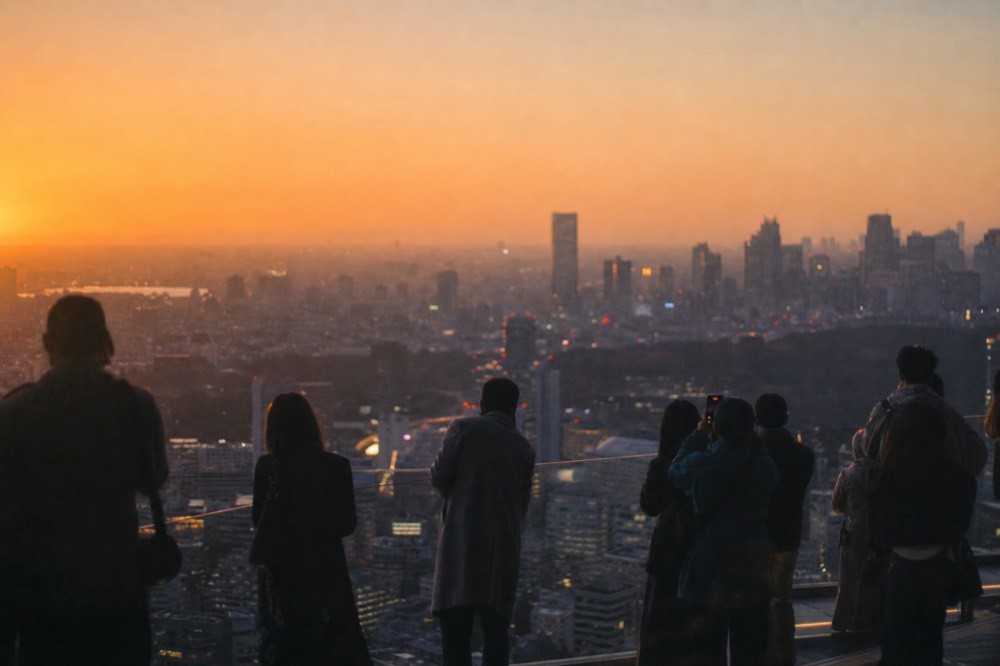
One correction to a widespread assumption. People treat the last-entry slot at 21:20 as the leftovers bin, and it is genuinely the easiest window to get, but it is not a consolation prize. The Crossing Light show runs at night, the crowd on the rooftop thins considerably after nine, and the queue at the Sky Edge corner drops from a fifteen-minute wait to almost nothing. For photographers that is a real trade rather than a downgrade, which is why the night entry options get booked deliberately rather than by accident.
| Slot | Release-day pressure | What usually happens | Sensible response |
|---|---|---|---|
| Sunset hour, Friday to Sunday | Highest | Often gone within minutes of 00:00 | Be at the keyboard at the release minute |
| Sunset hour, Monday to Thursday | High | Gone the same night on most dates | Book at release, do not wait a day |
| 19:00 to 21:00, weekend | Moderate to high | Thins through the fortnight | Book within a few days of release |
| 15:00 to 16:30, any day | Moderate | Frequently available for a week or more | Comfortable to book a few days out |
| 10:00 to 12:00, any day | Low | Regularly available on the day | Fine as a same-day fallback |
| 12:00 to 15:00, weekday | Low | The most forgiving window on the board | Fine as a same-day fallback |
| Last entry, 21:20 | Lowest | Usually open when everything else is not | Deliberately good for night photography |
What do you do when your date has already sold out?
Work down four rungs in order. Check adjacent slots on the same date, since a sold-out 17:30 does not mean a sold-out 11:00. Then check the direct admission listing. Then look at a guided tour or a drink-set ticket, both of which hold entry outside the ordinary allocation. Only then consider another deck.
The first rung costs nothing and solves more cases than people expect, because the sell-out is usually slot-shaped rather than date-shaped. If you can be flexible about the hour, a full day almost always has a hole in it somewhere before 15:00. If you cannot, the second rung is worth ten seconds: the direct listing carries its own view of availability, and it is quicker to glance at a live calendar than to reload the web shop hoping for a release that is not coming.
The third rung is the one most visitors have never heard of, and it is the genuinely useful part of this page. Tours that include admission hold their own entry, bought in advance by the operator, which means their calendar and the public calendar are not the same calendar. When a Saturday sunset has been gone for a week, the guided tour that pairs the crossing and Hachiko with rooftop entry can still be sitting there at 4.8 stars across 65 reviews with free cancellation up to 24 hours out. The price is $85 rather than under twenty, so it is a real decision and not a loophole, but if the alternative is not going up at all, the honest comparison is $85 against nothing.
The seasonal rooftop bar is the quiet fourth option. THE ROOF runs on the Sky Stage from 29 April to 25 December, sells drink-set tickets from 7,000 yen for over-20s only, and those sets include the admission. Nobody buys a 7,000-yen drink set to save a sunset, but a couple who were going to buy two 3,400-yen evening tickets and then pay for cocktails in the 46F Paradise Lounge are not as far from that number as they assume. Compare live availability before you decide, since it is easy to hold a sunset slot through a small-group walk for less than the drink set costs.
| Fallback | From | Rating (reviews) | Cancellation | What it gets you |
|---|---|---|---|---|
| Direct admission listing | $17.70 | 4.7 (45,800) | No free-cancellation claim | Timed entry, nothing else |
| Admission plus 24-hour subway pass | $43.98 | 5.0 (5) | Non-refundable | Entry plus unlimited subway for a day |
| Crossing and Hachiko guided tour | $85 | 4.8 (65) | Free up to 24 hours | Guide, crossing, Hachiko, deck entry |
| Night walking tour with sky entry | $89 | 4.3 (252) | No free-cancellation claim | Evening street walk plus entry |
| Sunset entry and night walk | $94 | 4.8 (6) | Free up to 24 hours | A held sunset slot plus a night route |
| Night view and local vibe tour | $98 | 4.7 (138) | Free up to 24 hours | Night entry plus back-street Shibuya |
| Harajuku and Meiji Shrine tour | $119 | 4.6 (24) | Free up to 24 hours | Half a day, three districts, deck entry |
Which tickets can you not buy online at all?
Child admissions. Elementary-school children pay 1,200 yen at any time of day, and that ticket exists only at the 14F counter; the web shop does not sell it. Preschoolers aged 6 and under go free with no ticket at all. Everyone aged 12 and over, outside elementary school, pays the adult rate.
This creates a small trap for families, and it is worth walking through slowly. Two adults and one nine-year-old cannot be bought as one online transaction. The adults buy online at 2,700 or 3,400 apiece, the child is bought in person on the day, and the two purchases have to land on the same slot. In practice that means buying the adult tickets at release, then going to floor 14 on the day with time in hand, before your entry window rather than at it.
The awkward edge is the 12-year-old. Japanese elementary school runs to sixth grade, so a child who is 12 but still in elementary school qualifies for the 1,200-yen rate, while a 12-year-old who has started junior high pays adult. Nobody at the counter is going to interrogate a family about school years, but the rule as published draws the line at elementary enrolment rather than at a birthday, which is why age alone does not answer the question. Who pays and who does not is set out in full in the note on who actually needs a ticket.
The other purchase that never appears in the ordinary web-shop flow is the drink-set admission for THE ROOF, sold as its own product, over-20s only, with sofa seating aimed at pairs. Treat it as a separate door rather than an upgrade, since it has its own season and its own inventory.
| Visitor | Ticket needed | Where you can buy it | Price |
|---|---|---|---|
| Adult and anyone 12 or over past elementary | Adult admission | Web shop or 14F counter | 2,700 or 3,400 online, 3,000 or 3,700 at the counter |
| Elementary-school child, including 12-year-olds | Child admission | 14F counter only | 1,200 yen, any entry time |
| Preschooler, age 6 and under | None | No purchase needed | Free |
| Family mixing adults and a school-age child | Both types | Split: adults online, child in person | Two transactions, one slot |
| Adult wanting the rooftop bar, age 20 or over | Drink-set admission | Sold as its own product | From 7,000 yen, 29 April to 25 December |
What happens after you have paid?
Web-shop tickets are non-refundable and cannot be moved to another date or time, so the slot you choose at 00:00 is the slot you own. The single exception is weather: if the open rooftop is shut when you arrive, you can cancel before you scan in. Once you have entered, there is no refund.
The rooftop closes without notice for strong wind, rain, lightning and extreme heat, and on those days visitors are held to the indoor 46F Sky Gallery. That floor is not nothing, with its digital art and its landmark-spotting windows, but it is not why anyone bought the ticket, and the decision point matters: the refund window closes the moment your ticket is scanned. Check the rooftop status posted at the gate before you go through, not after. The official Shibuya Sky ticket and access page and its visitor FAQ both carry the current rules, and the deck's entry in Go Tokyo's attraction listing is a useful second read on hours.
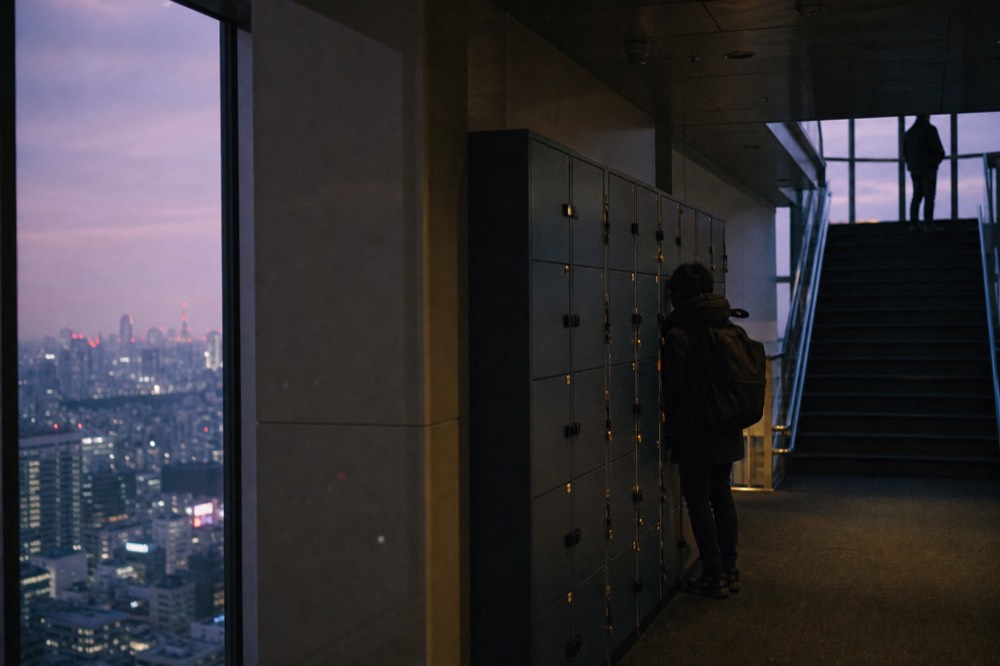
Then there are the rooftop rules, which surprise people at the last escalator. Nothing loose goes up: no bags of any kind, no hats or caps, no tripods, no selfie sticks, no food or drink, no earphones. A phone is fine. A camera on a neck strap is fine. Everything else goes into the 100-yen coin-return lockers on 46F, and a suitcase should never have come to floor 14 in the first place, which is what the station lockers are for. The rule is about objects falling 229 m onto the busiest pedestrian crossing on earth, so it is enforced properly rather than politely.
Nothing rushes you once you are inside. There is no exit time printed on the ticket, typical visits run one to two hours, and sunset ticket-holders stay longest because they are effectively buying three views: daylight, the colour, and the lit city. If you want the whole progression, enter about an hour before the sun goes and plan on a long stay. It is one of the few cases where the more expensive after-15:00 tier is also the better-value one, and you can see which entry times are still open before committing to an evening.
| Situation | What the rules say | Your move |
|---|---|---|
| You picked the wrong slot | No date or time changes on web-shop tickets | Treat the release-minute choice as final |
| Rooftop shut for wind or storm when you arrive | Indoor 46F stays open, refund only before entry | Decide at the gate, before scanning |
| Weather turns after you scan in | No refund once inside | Ride it out on 46F, the gallery stays open |
| You arrive with a suitcase | No bags on the rooftop | Station lockers, not floor 14 |
| You are wearing a cap | Hats are not allowed up top | 100-yen coin-return locker on 46F |
| You want to stay for the whole light change | No time limit once inside | Enter roughly an hour before sunset |
What is the fastest way to get this right?
Decide the date and the slot before release day. Convert 00:00 Japan time into your own clock and set an alarm five minutes early. Buy adult admissions the moment the drop lands, add child tickets at the 14F counter on the day, and keep a tour that holds its own entry in reserve if the date is already gone.
Almost every unhappy story I hear about this deck traces back to one of three things, and none of them is the price. Someone did not know the release was a fixed moment. Someone assumed the counter was a backup. Someone booked the slot without checking when the sun actually sets in that month, then arrived at 19:00 in December to find the show had finished at 16:43. The first two are fixed by a calendar reminder. The third is fixed by a glance at Tokyo sunset times before you pick the hour.
If you want the shape of the visit itself rather than the purchase, what the three zones are actually like covers the escalator ascent, the 46F gallery and the open roof in order. And if you are still weighing this against the other towers before spending anything, the comparison of Shibuya Sky Tickets against every other route up is the place to start.
Frequently asked questions
Does Shibuya Sky ticket sell out?
Regularly, and predictably. Sunset and early-evening windows often clear within minutes of the 00:00 release fourteen days out, and weekends empty before the matching weekday. Late morning and midday slots are far more forgiving and are frequently still available on the day. When the web allocation for a date is gone, the 14F counter has nothing left either.
How far in advance can you book Shibuya Sky?
Exactly 14 days, no earlier. Each date goes on sale at 00:00 Japan time on the day two weeks before it, and the whole allocation appears at once. If your trip is three months out, you cannot buy admission yet. A guided tour that includes entry is the one way to lock the roof in further ahead than the fortnight window allows.
Is same-day entry possible at the 14F counter?
Sometimes, at the 14F counter, for 3,000 yen before 15:00 or 3,700 after. The counter only sells what the web shop did not, so same-day success depends on the slot: late morning and midday often survive, sunset almost never does. Child admissions at 1,200 yen are the exception, sold only at that counter and only in person.
What time do tickets go on sale in Japan?
Midnight, 00:00 Japan Standard Time, which is UTC plus nine. In summer that is 16:00 the previous afternoon in London, 11:00 the previous morning in New York and 08:00 in Los Angeles. Buyers in the Americas and Europe get the release during their own waking hours, which is a real advantage over anyone already in Tokyo.
Can you get a refund if the rooftop is closed?
Only before you enter. High wind, rain, lightning and extreme heat all close the open Sky Stage, and visitors are then limited to the indoor 46F gallery. If that is not what you paid for, cancel at the gate before your ticket is scanned. After entry there is no refund, because the indoor floor is still open and you have used the admission.
Your Shibuya Sky Booking Choice
Fit The Way In To Your Trip
Initial recommendation, not personalised. Confirm your party's requirements and dates with the provider.
Have a travel date in mind? Check the direct admission ticket before arranging the rest of your Tokyo trip.
The timed-entry ticket most visitors buy: straight to the 229 m open rooftop, all three zones, instant mobile confirmation.
Non-refundable once issued; sunset slots go within minutes of the 14-day release; no bags on the rooftop (46F lockers).
Compare Options And Fit Your Day
- the direct admission ticket
- The timed-entry ticket most visitors buy: straight to the 229 m open rooftop, all three zones, instant mobile confirmation. Non-refundable once issued; sunset slots go within minutes of the 14-day release; no bags on the rooftop (46F lockers).
- the held sunset walk
- Holds the hardest ticket of the day for you: a reserved sunset-window entry wrapped in a guided walk as the streets switch from dusk to neon. New listing with a handful of reviews so far; sunset-window deck entry included; free cancellation up to 24 hours; departure timed to sunset year-round.
- the guided crossing walk
- Two hours with a local through Hachiko, the Crossing and Center Gai, finishing with the included trip up the deck to read the district from above. Small-group walk; deck admission included; free cancellation up to 24 hours; meeting point on the listing.