Tokyo Observation Decks Compared: Which One Is Best? (2026)
Six decks, 150 metres to 450, and a price spread from nothing at all to 3,400 yen. Height turns out to be a poor guide to which one you will remember.
 By Mia Nakamura, licensed Tokyo tour guide based in Shibuya
Short answer
Shibuya Sky is the best paid deck for most visitors: 229 metres, open rooftop, directly over the Scramble Crossing, 2,700 yen online before 15:00. Skytree wins pure height at 350 and 450 metres from about 1,800 yen. The Metropolitan Government Building in Shinjuku is free at 202 metres and beats several paid decks.
Six Decks, One Honest Shortlist
Height is cheap in Tokyo and open air is not. If the rooftop is your pick, its calendar is the only one that runs out; check your date before anything else is planned.
A guest asked me last winter, halfway up the escalator on the 14th floor, whether she had picked the wrong tower. She had read that Skytree was 121 metres taller and cheaper. She was right on both counts, and she still walked out of Shibuya an hour later saying she would not swap. That gap between what the numbers say and what the visit delivers is the whole subject of this page.
Tokyo has six viewing platforms worth a visitor's time, plus a handful of cafés and rooftops that sell a sightline with a coffee. They range from 150 metres to 450, and one of the good ones costs nothing at all. Only one is open to the sky. Sort them by height and you get one ranking, sort them by what you actually look at and you get a completely different one, and the second ranking is the useful one.
Which Tokyo observation deck is best?
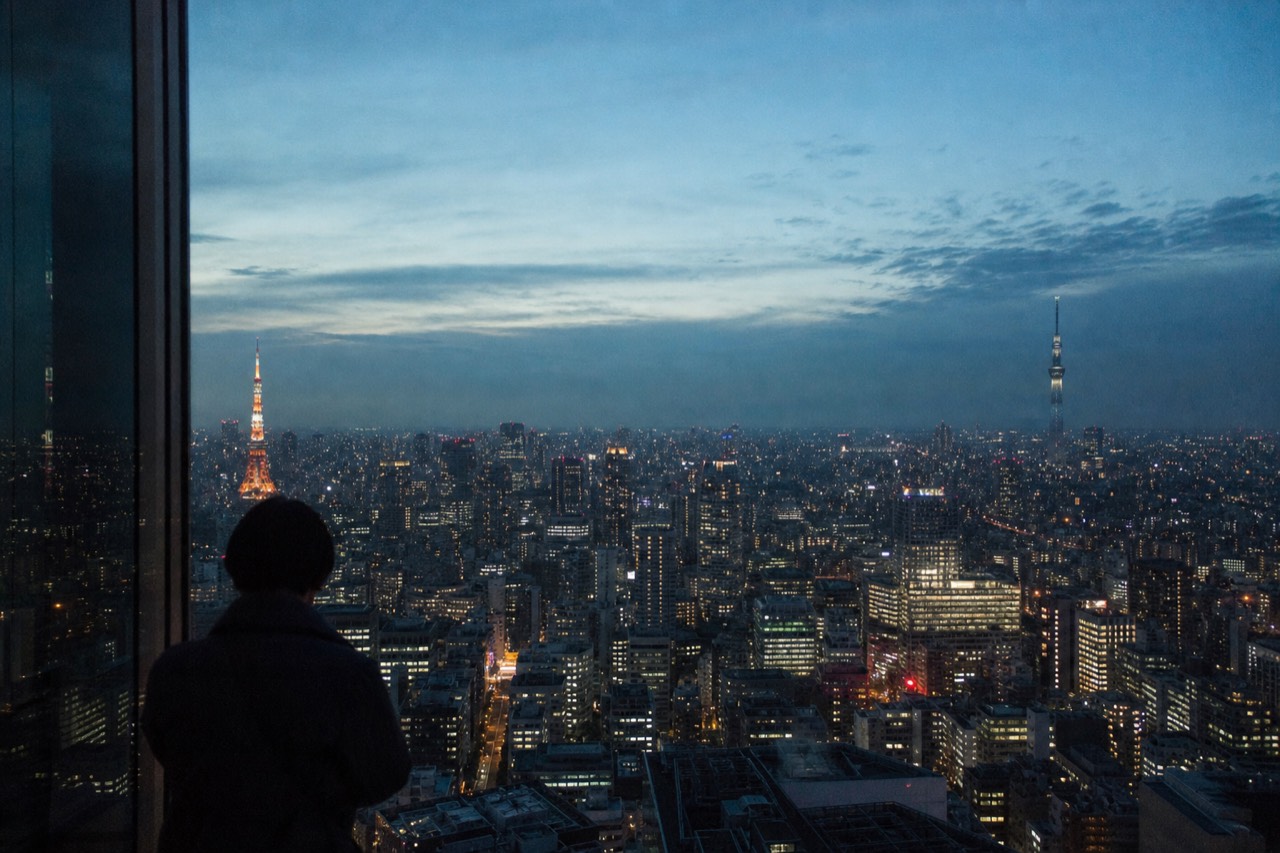
For most visitors, SHIBUYA SKY: 229 metres, the only open rooftop of the group, directly above the Scramble Crossing, 2,700 yen online before 15:00. Tokyo Skytree wins on height at 350 and 450 metres from about 1,800 yen. The free 202-metre deck in Shinjuku beats several paid ones.
The reason the shorter deck usually wins is that a view needs a subject. Skytree gives you the largest horizon in Japan and no particular thing to look at within it. Shibuya gives you one of the most recognisable pieces of ground on the planet, seen from almost directly overhead, plus an open roof that removes the glass from every photograph you take. Those two things are what people describe when they get home.
Skytree still owns the arguments Shibuya cannot answer. It is cheaper at entry level, it never closes for weather, it books days rather than weeks ahead, and its Tembo Galleria at 450 metres is a genuine record you can stand inside. If your priority is altitude or your date is tomorrow, the case for the taller tower is straightforward, and the side by side comparison of Shibuya Sky against the Skytree works through the full trade.
Two decks in this group are consistently underrated. The Metropolitan Government Building in Shinjuku puts you 202 metres up for nothing, later into the evening than several paid competitors. Sunshine 60's Tenbou Park in Ikebukuro stands at 251 metres, higher than the Shibuya rooftop, for 700 yen on a weekday. Neither will be the deck you photograph most, and both are better value than their reputations suggest.
| Deck | Height | Open air? | Adult price | What it is really for |
|---|---|---|---|---|
| SHIBUYA SKY | 229 m rooftop | Yes, the only one here | 2,700 yen before 15:00, 3,400 after | The Scramble Crossing from overhead, and sunset |
| Tokyo Skytree, Tembo Deck | 350 m | No | From about 1,800 yen online | The largest horizon in Japan |
| Tokyo Skytree, Tembo Galleria | 450 m | No | Combo from about 3,000 yen | Standing at the highest public point in the country |
| Tokyo Tower, Main Deck | 150 m | No | 1,500 yen | Central Tokyo at close range, open latest of all |
| Tokyo Tower, Top Deck Tour | 250 m | No | About 3,300 yen web | A guided, timed ascent inside the landmark itself |
| Metropolitan Government Building | 202 m | No | Free | Wide central Tokyo and Fuji at no cost |
| Sunshine 60, Tenbou Park | 251 m | No | 700 yen weekday, 900 weekend | A quiet 360 degree deck away from the crowds |
| Roppongi Hills, Tokyo City View | About 250 m | No | About 1,800 to 2,400 yen | Tokyo Tower lit, framed from across the city |
How much height does each yen actually buy?
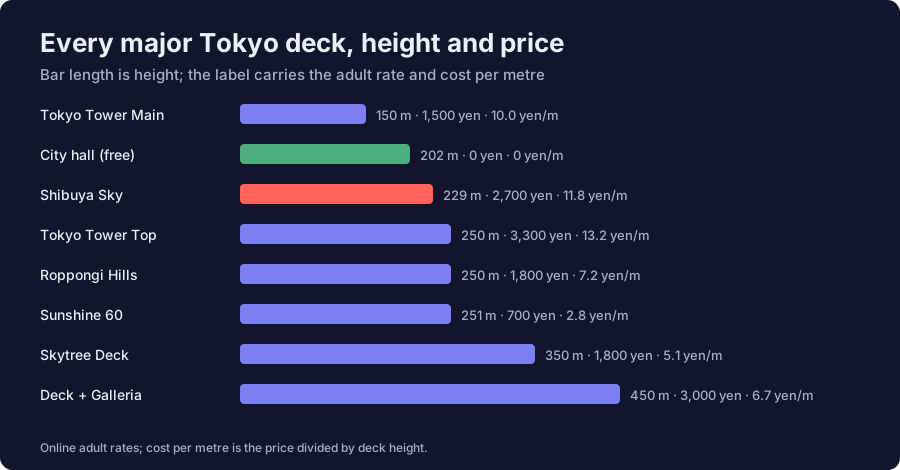
Divide the adult price by the height and the ranking inverts. The free Shinjuku deck costs nothing per metre, Sunshine 60 runs about 2.8 yen a metre, Skytree's Tembo Deck about 5.1, Tokyo Tower's Main Deck 10, and Shibuya Sky about 11.8 before 15:00. The best-loved deck is also the dearest by altitude.
Say plainly what this measure is: crude, and deliberately so. Yen per metre treats a view as a commodity, which it is not, and it punishes exactly the deck most visitors rate highest. The number is useful anyway, because it exposes where the money goes. Nobody paying 2,700 yen in Shibuya is buying altitude. They are buying an open roof and a subject, and the arithmetic proves it by making the purchase look irrational.
Look down the column and the genuine bargains stand out. Sunshine 60 at 700 yen for 251 metres is the cheapest paid height in the city by a wide margin, and the free Shinjuku deck is unbeatable on this measure by definition. Skytree's entry tier at roughly 5 yen a metre is the best value among the famous decks, which is a fair reflection of what it does well.
The step from Tembo Deck to Tembo Galleria is the one to think hardest about. Another 100 metres for roughly 1,200 yen more when booked as a combo, or about 1,400 yen if you add it at the tower, and the view differs less than the height gap suggests. Plenty of visitors come down saying the Deck was the better half of the ticket, a point the honest verdict on whether the Skytree is worth going up works through in detail; if you decide it is, check the current ticket here, a separate booking from anything on this page.
| Deck | Adult price | Height | Yen per metre |
|---|---|---|---|
| Metropolitan Government Building | Free | 202 m | 0 |
| Sunshine 60, Tenbou Park | 700 yen weekday | 251 m | About 2.8 |
| Tokyo Skytree, Tembo Deck | About 1,800 yen | 350 m | About 5.1 |
| Tokyo Skytree, Deck plus Galleria | About 3,000 yen | 450 m | About 6.7 |
| Roppongi Hills, Tokyo City View | About 1,800 yen | About 250 m | About 7.2 |
| Tokyo Tower, Main Deck | 1,500 yen | 150 m | 10.0 |
| SHIBUYA SKY, before 15:00 | 2,700 yen | 229 m | About 11.8 |
| Tokyo Tower, Top Deck Tour | About 3,300 yen | 250 m | About 13.2 |
| SHIBUYA SKY, from 15:00 | 3,400 yen | 229 m | About 14.8 |
Can you see Tokyo from above for free?
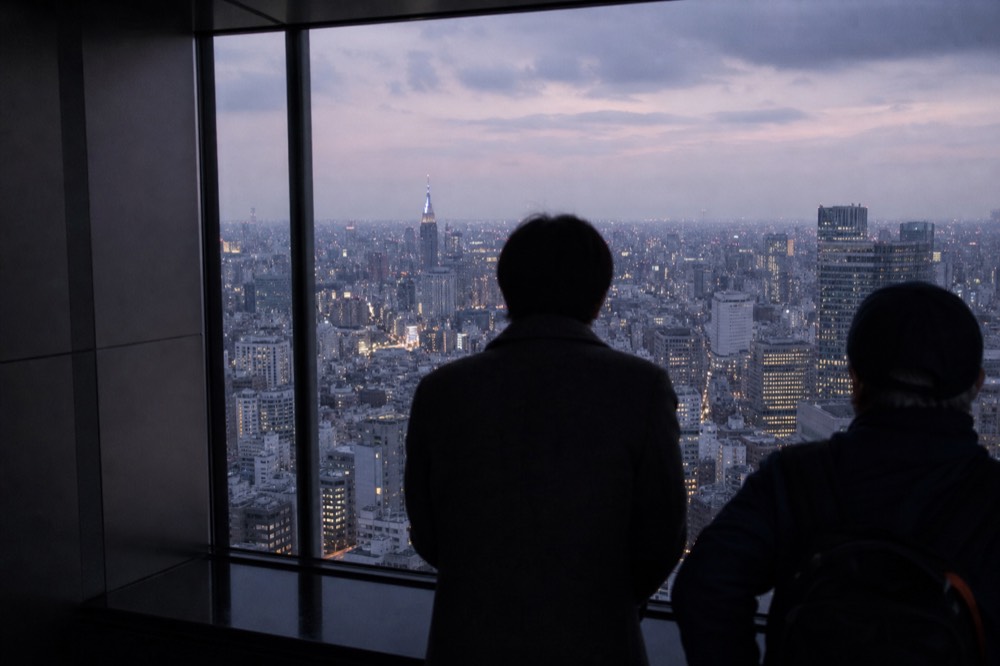
Yes, and the free option is genuinely good. The Metropolitan Government Building in Shinjuku runs observatories at 202 metres in both of its twin towers, admission free, open until around 22:00 with last entry about 21:30. Several café viewpoints over the Scramble Crossing cost only the price of a drink.
The Shinjuku deck is the one most first-time visitors skip and most repeat visitors recommend. At 202 metres it sits 27 metres below the Shibuya rooftop, sees central Tokyo, Tokyo Tower, Skytree and Fuji on a clear day, and asks for nothing but a security check at the entrance. The catch is scheduling: the north and south observatories close on staggered maintenance days, and the whole thing shuts over the New Year period, so check before you build a sunset around it. Tokyo's own tourist office keeps the free observatory's current hours up to date.
Around Shibuya itself there is a second free-ish tier, and it answers a different question. If what you want is the Crossing rather than the skyline, you do not need 229 metres. Mag's Park on the roof of Magnet by Shibuya 109 looks straight down the intersection from a few floors up for a small charge. The Starbucks inside the Tsutaya building on the second floor gives the classic eye-level angle for the price of a coffee, if you can find a seat. L'Occitane Café offers a calmer, seated version of the same sightline.
Those cheap viewpoints are not substitutes for the rooftop and they are not meant to be. They show the Crossing across, not from above, which is a completely different photograph. What they do brilliantly is let you see the intersection working before you decide whether the overhead version is worth 2,700 yen, and the district guide to what else is worth your time in Shibuya maps the walkable set of them.
| Viewpoint | Level | Cost | What it shows |
|---|---|---|---|
| Metropolitan Government Building | 202 m, 45F, both towers | Free | Central Tokyo, both towers, Fuji on clear days |
| Mag's Park, above Magnet by Shibuya 109 | Rooftop, a few floors up | Small charge | The Crossing head on from close range |
| Starbucks in the Tsutaya building | 2F, facing the intersection | Price of a drink, seating not guaranteed | The classic eye-level crossing angle |
| L'Occitane Café | 2F and 3F facing the crossing | Price of a drink or a set | A seated version of the same sightline |
| Sunshine 60, Tenbou Park | 251 m, 60F Ikebukuro | 700 yen weekday, 900 weekend | 360 degrees over northern and central Tokyo |
Which deck is best for a specific view?
Match the deck to the subject. The Crossing from overhead exists only at Shibuya Sky. The biggest horizon is Skytree's Galleria. Tokyo Tower photographs best from Roppongi Hills, and Mount Fuji is free from Shinjuku. Latest opening hours belong to Tokyo Tower's Main Deck at 23:00.
The mistake people make is picking a deck and then hoping the view they wanted is somewhere in it. Reverse that. If the picture in your head is the diagonal crowd flowing across a lit intersection, only one place in the city gives you that angle, and no amount of extra altitude anywhere else substitutes. If the picture in your head is Tokyo Tower glowing orange against a dark skyline, you cannot take it from inside Tokyo Tower.
Fuji deserves its own line here because so many visitors plan around it. Every deck on this list can see the mountain when the air is clear, and none of them can conjure it out of summer haze. Height helps at the margins, west-facing helps more, and the season decides everything: November through February is the reliable stretch, June through September is close to hopeless. The month-by-month pattern is set out in when Fuji actually shows from the city.
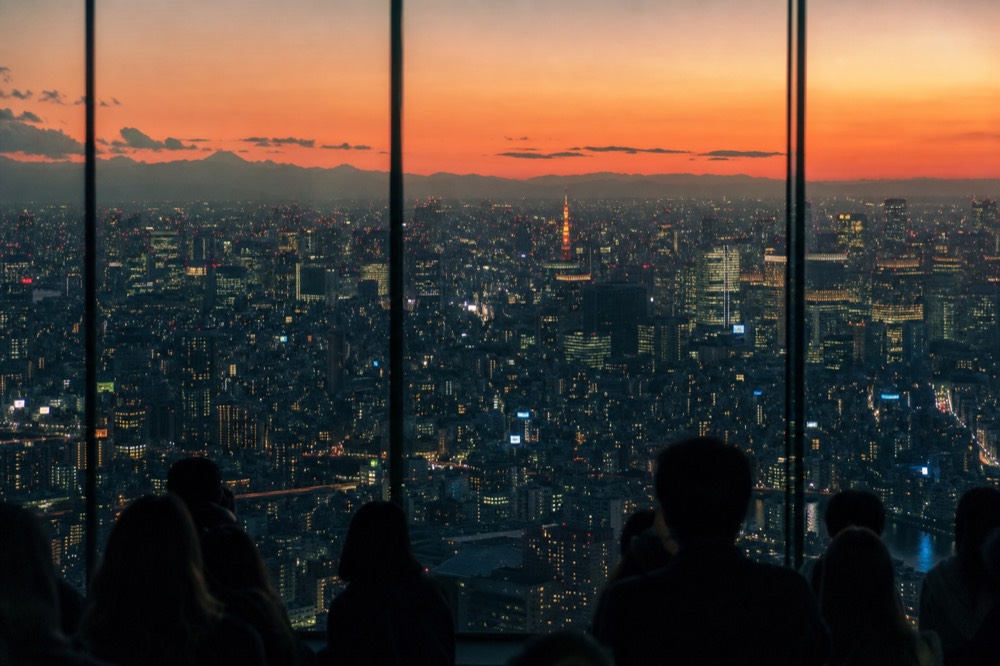
Night is the other axis people underweight. Shibuya Sky runs its Crossing Light show on the rooftop after dark and stays open until 22:30, Tokyo Tower's Main Deck runs to 23:00, and the free Shinjuku deck holds on until around 22:00. A late ascent is a different attraction from an afternoon one, quieter and more atmospheric, and evening tours that fold rooftop entry into a Shibuya walk are listed under guided visits that include the deck, and a sunset slot paired with a night walk covers both halves of the light.
| If you want | Go to | Why it wins |
|---|---|---|
| The Scramble Crossing from overhead | SHIBUYA SKY | The only public deck directly above it |
| The largest horizon in Japan | Skytree, Tembo Galleria | 450 metres, the highest public level in the country |
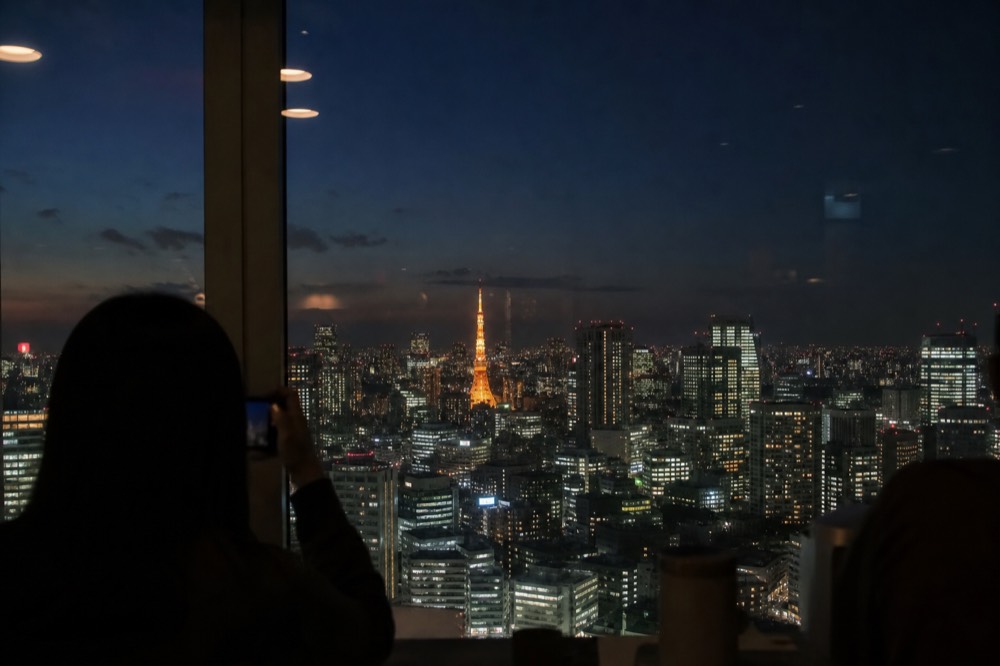
| Tokyo Tower lit against the skyline | Roppongi Hills, Tokyo City View | About 250 metres of glass aimed straight at it |
| Mount Fuji without paying | Metropolitan Government Building | 202 metres, free, open until around 22:00 |
| Open air and wind on your face | SHIBUYA SKY rooftop | Every other deck here is behind glass |
| The city near midnight | Tokyo Tower, Main Deck | Closes at 23:00, later than anything else here |
| A deck with elbow room on a weekday | Sunshine 60, Tenbou Park | 251 metres in Ikebukuro, off the main tourist circuit |
What happened to the Azabudai Hills Sky Lobby?
It stopped working as an open public viewpoint. Since 2024 the Sky Lobby on floors 33 and 34 of Mori JP Tower has been restricted to office tenants, Hills House members and paying customers of the venues up there, typically through a minimum spend of around 1,100 yen or a drink order. It is not a free deck.
This matters because plenty of guides written in 2023 and early 2024 still describe it as a free public balcony with the best close-up of Tokyo Tower in the city, and travelers arrive expecting to walk in. The building itself is Japan's tallest, the lobby is spectacular, and neither fact changes the access rule. Dining 33, the Sky Room Café and Bar, and the patisserie on those floors are the routes in, which makes it a restaurant view rather than an observatory.
Treated as what it now is, it is still worth knowing about. A drink at that height facing Tokyo Tower is not expensive by Tokyo standards, the hours run roughly from mid-morning to around 21:00 depending on which venue you use, and the crowd is a fraction of what any ticketed deck carries. Just do not build an itinerary around it as a free stop, and do not send anyone there expecting a public observation floor.
There is a broader lesson in it for planning. Tokyo's skyline changes fast, and access rules change faster than the buildings do. Anything described online as a secret free deck deserves a check against the venue's own current page before you cross the city for it, because the pattern of the last few years has run one way: informal public access gets formalised, then charged for, then restricted to customers.
Which deck suits which traveler?
One deck and a tight budget points to Shinjuku's free observatory. One deck and one shot at Tokyo points to Shibuya Sky. Families and late deciders do better at Skytree, photographers at the Shibuya rooftop, and repeat visitors at Sunshine 60 or Roppongi Hills, both of which stay quiet.
The single most useful sorting question is how many decks you will realistically do. Visitors on a four-day trip almost always do one, and for them the answer is the deck that produces the strongest memory rather than the best value, which is the Shibuya roof at sunset. Visitors with a week often do two, and the best pairing is a free daylight deck for orientation plus a paid evening deck for the photograph.
Families deserve a specific warning that applies to Shibuya and nowhere else on this list. The elementary-age child ticket costs 1,200 yen and is sold at the 14th-floor counter only, never online, so a family booking in advance buys adult tickets on the web and picks up the child ticket on arrival. Age six and under enters free. It is a two-minute step if you know, and an unpleasant surprise at the gate if you do not.
Anyone deciding late has a narrower field than they expect. Shibuya Sky's online allocation opens exactly 14 days ahead and its sunset windows go within minutes, and when a date is gone online, the counter has nothing either. Skytree, Tokyo Tower, Sunshine 60 and the free Shinjuku deck all take same-day visitors most of the time, so a spontaneous evening has plenty of options, just not the one everyone wants. If your dates are firm, check what is still open on the rooftop before you plan around anything else.
| Traveler | The pick | Cost | The catch |
|---|---|---|---|
| First trip, one deck only | SHIBUYA SKY | 2,700 yen before 15:00 | Released 14 days ahead, sunset gone in minutes |
| Zero budget | Metropolitan Government Building | Free | Enclosed, and it closes on scheduled maintenance days |
| Family with young children | Tokyo Skytree | From about 1,800 yen | Oshiage is a long hop from west Tokyo |
| Photographer | SHIBUYA SKY rooftop | 2,700 or 3,400 yen | No tripods, no bags, phones and neck-strap cameras only |
| Repeat visitor to Tokyo | Sunshine 60, Tenbou Park | 700 yen weekday | Ikebukuro is off most itineraries |
| Rainy or windy afternoon | Roppongi Hills, Tokyo City View | About 1,800 to 2,400 yen | Price shifts with the exhibition on show |
| A late night after dinner | Tokyo Tower, Main Deck | 1,500 yen | 150 metres is the lowest deck here |
When is each deck open, and which one closes first?
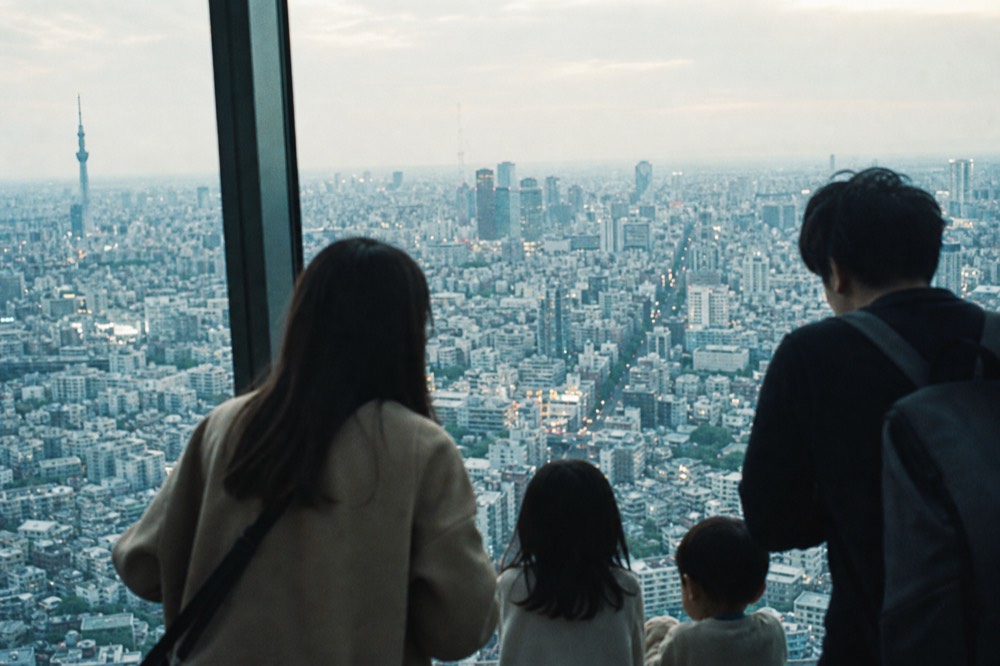
Tokyo Tower's Main Deck runs latest, to 23:00 with last entry around 22:30. Shibuya Sky closes at 22:30 with last entry 21:20. The free Shinjuku deck and Roppongi Hills both stop around 22:00, Sunshine 60 by 21:00 or 21:30, and Skytree varies by season.
Last entry is the number that ruins evenings, not closing time. Shibuya Sky's 21:20 cutoff is more than an hour before its 22:30 close, and Skytree's is typically about an hour before whatever time it is shutting that day. Arrive at the gate ten minutes late and there is no negotiation. Build in a margin, especially if you are coming off a train line during rush hour.
The other schedule trap is maintenance. The Shinjuku observatories close on staggered days between the north and south towers, so on any given date one of the two is usually available and occasionally neither is, plus a full shutdown over the New Year period. Skytree's opening time moves between 9:00 and 10:00 and its close between 20:30 and 22:30 depending on the day and season, which is why the official ticket page is the only reliable source for a specific date.
Weather is a Shibuya-specific issue that no other deck on this list shares. The open rooftop closes without notice in wind, rain, lightning or extreme heat, and visitors are held on the indoor 46th-floor gallery instead. Refunds are possible only before you enter, so if the forecast is marginal, decide at the gate rather than after. Every enclosed deck in this comparison runs regardless of conditions.
| Deck | Typical opening | Typical closing | Last entry | Schedule notes |
|---|---|---|---|---|
| SHIBUYA SKY | 10:00 | 22:30 | 21:20 | Rooftop closes in wind, rain, lightning or extreme heat |
| Tokyo Skytree | 9:00 or 10:00 | 20:30 to 22:30 | About an hour before close | Varies by day and season |
| Tokyo Tower, Main Deck | 9:00 | 23:00 | About 22:30 | The latest close of any deck here |
| Tokyo Tower, Top Deck Tour | 9:00 | 22:45 | Last tour about 22:15 | Timed tour, not open entry |
| Metropolitan Government Building | 9:30 | 22:00 | About 21:30 | Staggered maintenance days, closed over New Year |
| Sunshine 60, Tenbou Park | 10:30 or 11:00 | 21:00 or 21:30 | About an hour before close | Seasonal variation |
| Roppongi Hills, Tokyo City View | 10:00 | 22:00 | About 21:30 | Hours shift for events and exhibitions |
A day that uses two decks well
The strongest pairing is free daylight plus paid dusk: the 202-metre Shinjuku observatory in the afternoon to learn the city's layout, then two stops down the Yamanote to the Shibuya rooftop for sunset and the night city. Total cost is one ticket, and the second half is the one to book 14 days ahead.
Start in Shinjuku about ninety minutes before sunset. The free deck gives you an orientation you cannot get any other way: Skytree east, Tokyo Tower southeast, the Shibuya cluster south, Fuji west if the air allows. Spend twenty-five minutes, name the towers, then leave. Doing this first makes the evening deck legible, because you already know what you are looking at.
Then move. Shinjuku to Shibuya is two stops and roughly seven minutes on the Yamanote, and the Sky Gate sits on the 14th floor of the building directly over the station, so there is no street walking at all. Aim to be through the gate at least forty minutes before sunset: the indoor 46th-floor gallery is worth twenty of those minutes, and you want to be on the roof while the light is still changing. Check the month before you set the alarm, since Tokyo's sunset swings from 16:40 in November to just before 19:00 in July, a spread mapped in the month-by-month sunset guide.
Stay after dark. Most visitors leave within twenty minutes of the sun going down and miss the better half, when the Crossing Light show runs and the intersection below turns into moving light. A typical visit runs one to two hours and sunset visitors stay longest, which tells you what the regulars have worked out. If you would rather have the district explained on the way up, an evening walk that includes deck entry covers both and cancels free up to 24 hours out.
| Time | Where | Cost | What you are doing |
|---|---|---|---|
| 90 min before sunset | Metropolitan Government Building, Shinjuku | Free | Naming the towers, learning the layout in daylight |
| 60 min before sunset | Yamanote south, two stops | Train fare only | Shinjuku to Shibuya, about 7 minutes |
| 45 min before sunset | Sky Gate, 14F, Shibuya Scramble Square | 3,400 yen from 15:00 | Entry on the slot booked two weeks earlier |
| 35 min before sunset | Sky Gallery, indoor 46F | Included | Lockers, digital art, the warm-up before the roof |
| Sunset | Sky Stage, west side of the rooftop | Included | The open-air half, with Fuji in frame on a clear day |
| 45 min after | Sky Edge and the Crossing Light show | Included | The night city, and the intersection lit and moving |
| 90 min after | Street level, Hachiko exit | Free | Standing in the crossing you were just looking down at |
What the decks cost against what they deliver
Ranked on value rather than height, the order runs: the free Shinjuku deck, Sunshine 60 at 700 yen, Skytree's Tembo Deck at about 1,800, Tokyo Tower's Main Deck at 1,500, Roppongi Hills from about 1,800, then Shibuya Sky at 2,700. Ranked on what visitors remember, that order roughly reverses.
Both rankings are true, which is why this argument never settles. A 700-yen deck at 251 metres in Ikebukuro is objectively better value than a 2,700-yen deck at 229 metres in Shibuya. It is also not the place anyone flies to Tokyo to stand. Value answers the question of what you are paying for; memory answers the question of what you came for, and only one of those two shows up in your photographs a year later.
The practical resolution most people reach is to spend nothing on the orientation deck and everything on the atmosphere deck. That is why the pairing in the section above works so well, and why the free Shinjuku observatory is the most under-visited good thing on this list. Adding Sunshine 60 or Tokyo City View makes sense on a second or third trip, when the famous two are done and the appeal of a quiet floor with room to sit becomes obvious. Tokyo Tower's own current fee structure and the Ikebukuro deck's admission page both list weekday and weekend differences worth checking before you go.
One last honest word about the deck this site is named for. Shibuya Sky is not the highest, not the cheapest, not the easiest to book, and it closes its best feature when the wind gets up. It is still the one I send first-time visitors to, because it is the only one where the view has a story you can watch happen, roughly every two minutes, for as long as you care to stand there. You can compare Shibuya Sky Tickets in one place, including the guided options that hold a slot for you.
Frequently asked questions
Which observation deck in Tokyo is free?
The Metropolitan Government Building in Shinjuku, at 202 metres in each of its twin towers, with no admission charge and doors open until around 22:00. The north and south observatories close on staggered maintenance days and the whole building shuts over the New Year period, so check the current schedule before you plan an evening around it.
What is the highest observation deck in Tokyo?
Tokyo Skytree's Tembo Galleria at 450 metres, reached from the Tembo Deck at 350. The combined ticket starts around 3,000 yen online, or you can add the Galleria at the tower for roughly 1,400 yen on top of a deck ticket. Both levels are fully enclosed behind glass.
Is there an open-air observation deck in Tokyo?
SHIBUYA SKY is the one, at 229 metres. Its Sky Stage is a genuine open rooftop, which is why bags, hats, tripods, selfie sticks, food, drink and earphones are all barred up there and lockers sit on the 46th floor. The trade is weather: wind, rain, lightning or extreme heat close the roof without notice.
Which Tokyo deck is best for seeing Mount Fuji?
Any of them on a clear winter morning, and none of them in August haze. Height helps slightly and a west-facing position helps more, so the free Shinjuku deck and the Shibuya rooftop both perform well. November through February is the reliable stretch, while June through September often erases the mountain entirely.
Can you visit two Tokyo observation decks in one day?
Comfortably, if you pick ones that are near each other. Shinjuku's free deck and the Shibuya rooftop are two Yamanote stops apart, roughly seven minutes, which makes a free daylight visit plus a paid sunset visit the easiest pairing in the city. Skytree pairs better with Asakusa than with anything in west Tokyo.
Do I need to book a Tokyo observation deck in advance?
Only Shibuya Sky, and there the timing is strict: the online allocation opens exactly 14 days before the date at midnight Japan time, and sunset slots go within minutes. When a date sells out online the 14th-floor counter has nothing either. Skytree, Tokyo Tower, Sunshine 60 and the free Shinjuku deck usually take same-day visitors.
Your Shibuya Sky Booking Choice
Fit The Way In To Your Trip
Initial recommendation, not personalised. Confirm your party's requirements and dates with the provider.
Have a travel date in mind? Check the direct admission ticket before arranging the rest of your Tokyo trip.
The timed-entry ticket most visitors buy: straight to the 229 m open rooftop, all three zones, instant mobile confirmation.
Non-refundable once issued; sunset slots go within minutes of the 14-day release; no bags on the rooftop (46F lockers).
Compare Options And Fit Your Day
- the direct admission ticket
- The timed-entry ticket most visitors buy: straight to the 229 m open rooftop, all three zones, instant mobile confirmation. Non-refundable once issued; sunset slots go within minutes of the 14-day release; no bags on the rooftop (46F lockers).
- the Skytree admission ticket
- The direct timed ticket to the Tembo Deck at 350 m, for the days the taller enclosed tower belongs on the itinerary too. Separate building across town from Shibuya; indoor, behind glass; no Shibuya Crossing view; non-refundable per listing terms.
- the held sunset walk
- Holds the hardest ticket of the day for you: a reserved sunset-window entry wrapped in a guided walk as the streets switch from dusk to neon. New listing with a handful of reviews so far; sunset-window deck entry included; free cancellation up to 24 hours; departure timed to sunset year-round.